BEST AVAILABLE — TWO EXCEPTIONS NAMED
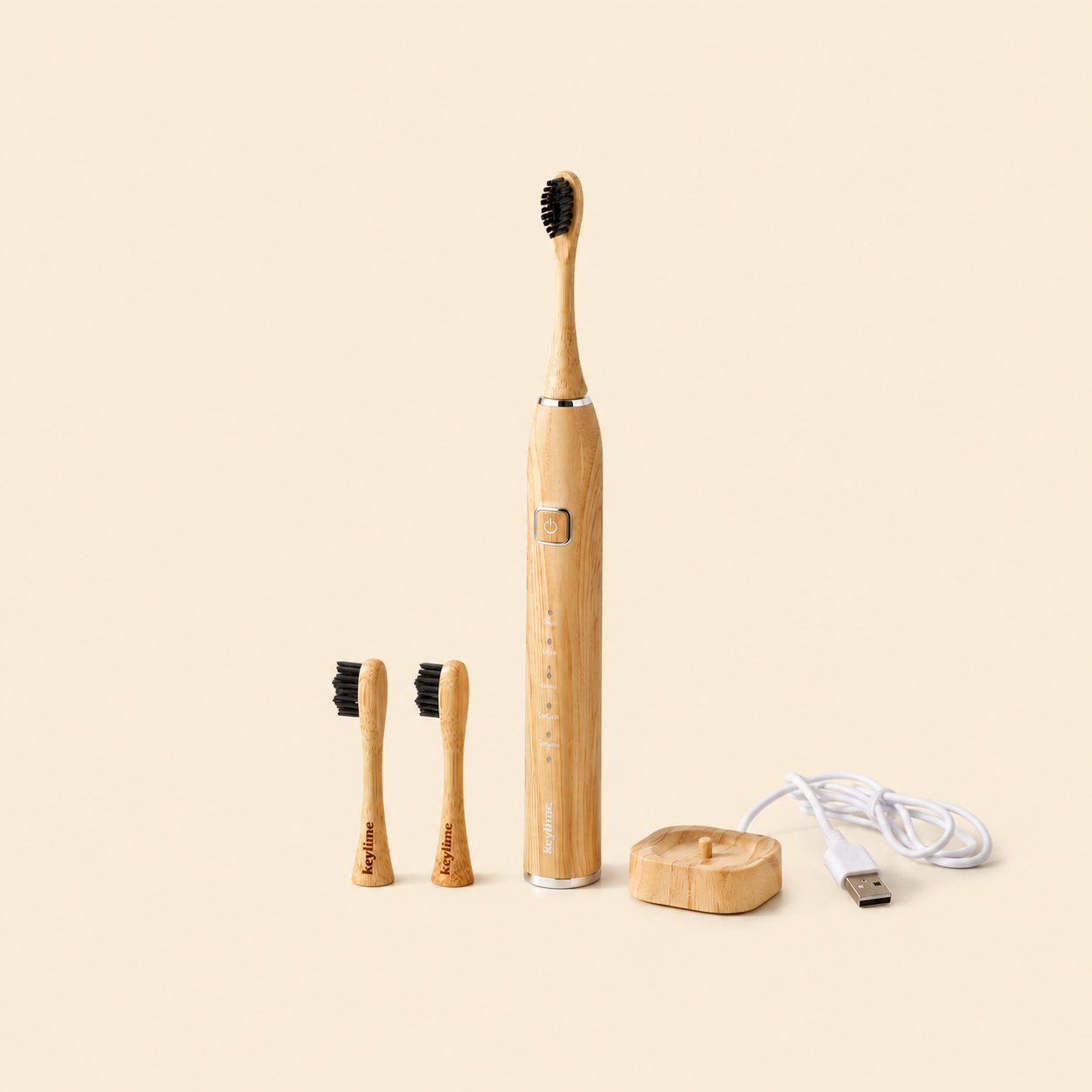
Electric toothbrushes are electronic devices; some plastic is unavoidable in the category today. This one is Best Available because it minimizes but doesn't eliminate that plastic. Two components are named:
1. Bristles are nylon-11 — synthesized from castor bean. Some brands call this "plant-based bristles." That's true about the feedstock but obscures the polymer: nylon-11 is a bio-based nylon, still nylon, still plastic. It sits in direct mouth contact.
2. The bamboo handle carries a PLA (polylactic acid) coating as a moisture barrier. PLA is a bio-based plastic; the coating sits on the surface you hold. Bamboo without the coating would need more frequent replacement due to water damage.
Non-plastic alternatives exist for bristles — boar bristle passes The Standard on the plastic question — but they don't work at sonic frequencies. Non-PLA finishes for bamboo exist (raw, beeswax, food-grade oil), just at shorter maintenance intervals.
For this brush to move to The Standard, the coating would need to be a plant-oil or beeswax finish, and the bristles would need a non-nylon fiber that operates at sonic frequencies. Neither exists alltogether at commercial scale today.
WHAT DOES PASS
The bamboo handle body and the bamboo replacement head bodies are the majority of the product's mass and are plant-derived. A conventional electric brush handle is 100% plastic. This one shifts the majority away from petroleum plastic. That's what qualifies it for Best Available.
E-WASTE NOTE
The brush contains internal electronics — sonic motor, PCB, USB battery. At end of life the handle becomes electronic waste and should go to a certified electronics recycler. The bamboo heads compost separately.